

🐾 Parent Guide: This article is part of our comprehensive Dog Health & Wellness Owner’s Guide, where you can find expert advice and tips.
There is a lot to love about a Bernese Mountain Dog. They are gentle, devoted, and impossibly beautiful — a tricoloured giant who somehow believes they are a lap dog. But any honest conversation about this breed has to include a hard truth: Berners are one of the shortest-lived large breeds, with an average lifespan of just 6 to 8 years, and they carry a disproportionately high risk of serious inherited conditions — cancer above all others.
This guide does not exist to discourage you from owning or loving a Bernese Mountain Dog. It exists to arm you with knowledge, because owners who understand what to watch for, what to ask their vet, and how to choose a responsibly bred puppy genuinely do give their dogs better, longer lives.
How Long Do Bernese Mountain Dogs Live?
The average Bernese Mountain Dog lives between 6 and 8 years — significantly shorter than most large breeds and strikingly brief compared to smaller dogs. Some Berners reach 10 or even 11 years, but those are exceptions rather than the rule. A landmark Dutch study found that at least 55% of Bernese Mountain Dog deaths are directly associated with malignant tumours, making cancer the single greatest driver of their shortened lifespan.
Understanding why this breed is so health-vulnerable starts at the genetic level. Berners were developed from a small founding population in the Swiss Alps, which created a relatively narrow gene pool. Over generations, certain hereditary conditions became deeply embedded in the breed. That does not mean every Berner will develop every condition on this list — but it does mean proactive health management is not optional. It is essential.
The Most Common Bernese Mountain Dog Health Issues
1. Cancer — Especially Histiocytic Sarcoma
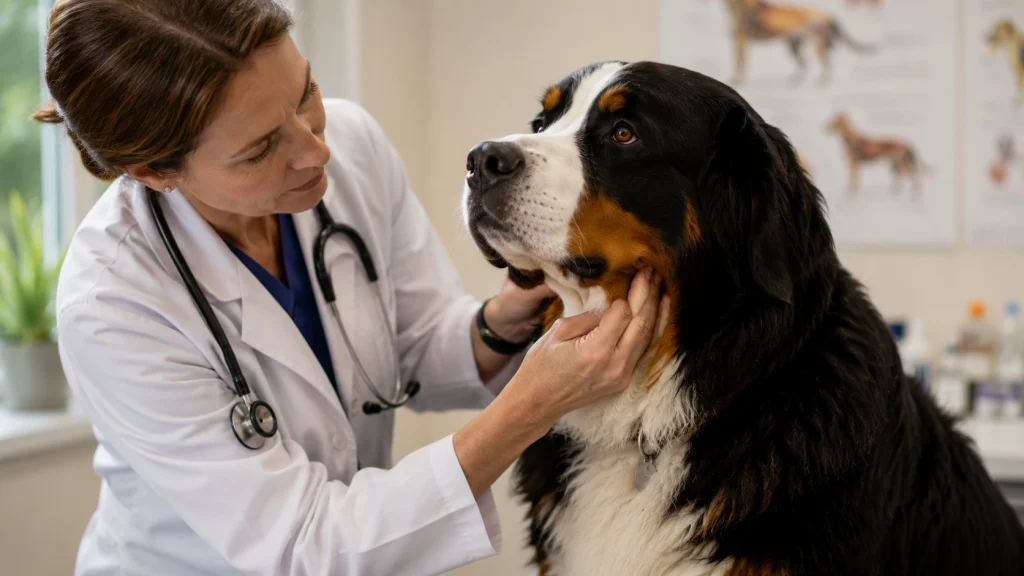
Cancer is the leading cause of death in Bernese Mountain Dogs, and within that category, histiocytic sarcoma is the condition that sets Berners apart from almost every other breed. Histiocytic sarcoma originates in immune cells called histiocytes and accounts for approximately 25% of all cancers diagnosed in the breed — a rate that dwarfs its occurrence in virtually every other dog breed except the Flat-Coated Retriever.
The disease has two main forms. The localised form tends to affect a single organ such as the spleen, lung, or skin. The disseminated (systemic) form is far more aggressive, spreading rapidly through multiple organs and often progressing from diagnosis to death within weeks. There are currently no consistently successful treatments — chemotherapy and radiation therapy have shown limited short-term benefit but do not provide a cure.
Beyond histiocytic sarcoma, Berners are also at elevated risk of:
- Lymphoma — cancer of the lymphatic system
- Mast cell tumours — variable in severity, from benign to highly aggressive
- Osteosarcoma — bone cancer, more prevalent in large breeds generally
Warning signs: unexplained weight loss, swollen lymph nodes (under the jaw, in front of the shoulders, behind the knees), persistent lethargy, loss of appetite, difficulty breathing, limping with no obvious injury, and any new lumps that grow quickly or feel firm.
2. Hip and Elbow Dysplasia
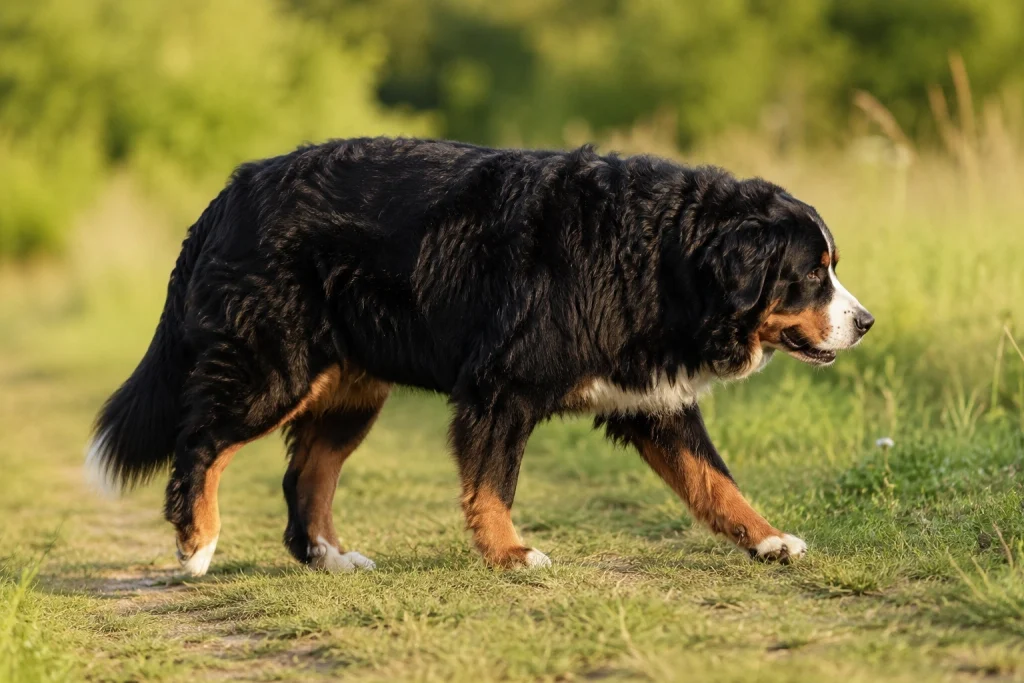
Hip and elbow dysplasia are among the most common orthopaedic conditions in large and giant breeds, and Bernese Mountain Dogs are no exception. Both conditions involve abnormal joint development — the hip socket or elbow joint fails to form correctly, causing progressive cartilage wear, pain, and arthritis over time.
Hip dysplasia ranges from mild (managed with anti-inflammatories and controlled exercise) to severe (requiring surgical intervention such as a total hip replacement). Elbow dysplasia spans a similar spectrum: some dogs remain functional with medical management, while others need surgery to remove bone fragments.
Signs to watch for: stiffness after rest, reluctance to jump or climb stairs, an altered gait (bunny-hopping in the hind legs is a classic hip dysplasia tell), one elbow visibly turned outward, reduced activity in a previously energetic dog.
Reputable breeders have their breeding dogs certified by the OFA (Orthopaedic Foundation for Animals) for both hips and elbows at a minimum of two years of age. Acceptable OFA hip grades are Excellent, Good, and Fair — ask to see certificates, not verbal assurances. For more on supporting joints throughout life, see our Dog Joint Health Guide.
3. Degenerative Myelopathy
Degenerative myelopathy (DM) is a progressive neurological disease that attacks the spinal cord, causing gradual loss of coordination and muscle function in the hind limbs. It is caused by a mutation in the SOD1 gene and can be identified through DNA testing.
DM typically appears in middle-aged to older dogs. Early signs are subtle — mild hind limb wobbling, scuffing of rear paws when walking, difficulty rising. Over months to years, the weakness advances to full hind-limb paralysis and eventually affects the front limbs and respiratory muscles. There is no treatment that reverses or halts DM. Physical therapy, hydrotherapy, and mobility carts can meaningfully maintain quality of life for a considerable time after diagnosis.
4. Bloat (Gastric Dilatation-Volvulus / GDV)

Bloat — clinically known as GDV — is one of the most urgent emergencies in veterinary medicine, and deep-chested breeds like the Bernese Mountain Dog face a statistically higher risk. In GDV, the stomach fills rapidly with gas and then twists on itself, cutting off blood supply to the stomach wall. Without emergency surgery, death can follow within hours.
Emergency warning signs — call your vet immediately if you see:
- A visibly swollen or tight abdomen
- Repeated unproductive retching — trying to vomit but producing nothing
- Restlessness or pacing that cannot be settled
- Excessive drooling
- Signs of pain — groaning, guarding the belly, unusual posture
- Sudden collapse
Preventive measures: feed two to three smaller meals per day rather than one large one, use a slow-feeder bowl, avoid vigorous exercise for at least an hour before and after eating. Some owners discuss prophylactic gastropexy (surgical stomach tacking, performed during spay or neuter) with their vet — this prevents the stomach from twisting even if it dilates.
5. Von Willebrand Disease
Von Willebrand disease (vWD) is the most common inherited blood clotting disorder in dogs, and Bernese Mountain Dogs carry a form of it. Von Willebrand factor helps platelets form clots — without adequate levels, even minor injuries or routine surgeries can cause excessive, difficult-to-control bleeding.
Many Berners carry the gene but show no obvious symptoms under normal daily life. The risk becomes apparent during surgery, tooth extractions, nail trimming injuries, or trauma. Before any procedure, inform your vet of your dog’s breed and request a vWD DNA test if your dog has not already been tested. DNA testing through Embark or the UC Davis Veterinary Genetics Laboratory provides a definitive carrier/affected status.
6. Progressive Retinal Atrophy (PRA) and Eye Issues
Progressive retinal atrophy (PRA) is an inherited group of diseases that cause the photoreceptor cells of the retina to degenerate progressively. In Bernese Mountain Dogs, PRA leads first to night blindness and then to complete loss of daytime vision. The progression is painless but ultimately total — there is no treatment to reverse or stop it.
Early signs: hesitation or reluctance in dim light, bumping into furniture or door frames, pupils that appear larger than usual or reflect light more brightly. DNA testing can identify PRA-affected and carrier dogs. Annual CAER (Companion Animal Eye Registry) examinations by a veterinary ophthalmologist are the certification standard used by responsible breeders. For a full overview of canine eye conditions, see our Dog Eye Health Issues guide.
7. Hypothyroidism
The thyroid gland regulates metabolism, and Bernese Mountain Dogs are among the breeds with a higher hypothyroidism rate. The condition develops gradually in middle-aged dogs and is frequently mistaken for normal ageing.
Signs of hypothyroidism in Berners:
- Weight gain despite no increase in food intake
- Low energy and increased sleep
- Thinning coat, hair loss, or a dull dry coat
- Skin darkening or thickening
- Cold intolerance
- Slow heart rate
Hypothyroidism is one of the most manageable conditions in this breed. A simple blood test confirms the diagnosis, and daily oral thyroid hormone medication restores normal function. Most dogs improve noticeably within weeks of starting treatment.
8. Heart Disease (Subaortic Stenosis)
Subaortic stenosis (SAS) is a congenital heart defect found in some Berner lines, where abnormal tissue below the aortic valve obstructs blood flow from the heart. Mild cases may cause no clinical problems throughout the dog’s life. Moderate to severe SAS can cause exercise intolerance, fainting, and in some cases sudden cardiac death in young dogs.
Cardiac auscultation by a board-certified cardiologist — screening for heart murmurs — is part of the BMDCA’s recommended health testing protocol for breeding dogs. For pet dogs diagnosed with SAS, management involves activity restriction and medication to reduce cardiac workload.
Warning Signs Every Berner Owner Should Know
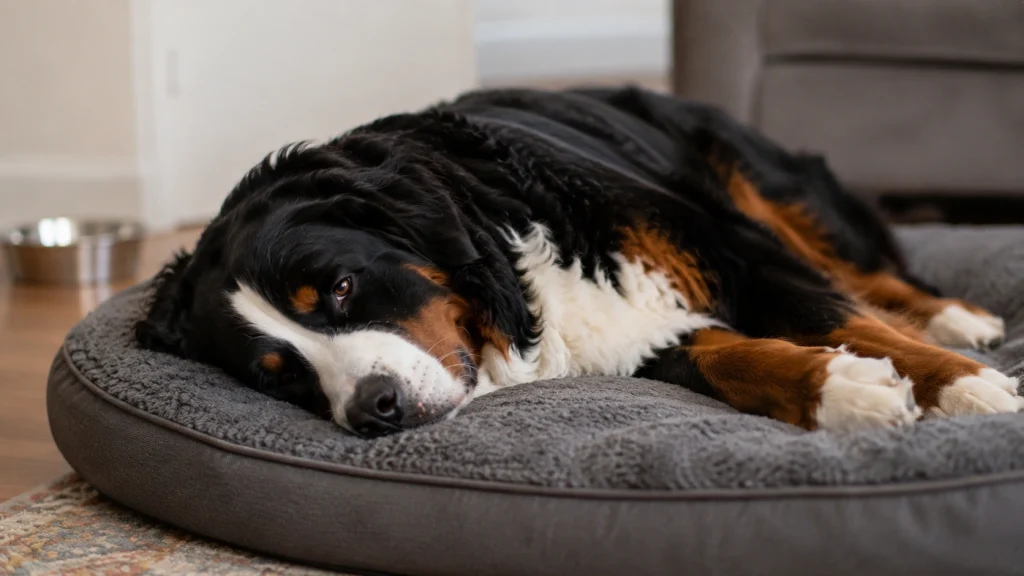
Because several serious Berner conditions share overlapping early symptoms — and because dogs instinctively conceal pain and illness — knowing what to watch for and acting on it early is one of the most important things you can do.
Take your Berner to the vet promptly if you notice:
- Unexplained weight loss (more than 5–10% of body weight)
- Any new lumps, bumps, or swellings, particularly ones that grow or change
- Swollen lymph nodes (under the jaw, in front of the shoulders, behind the knees)
- Persistent lethargy or a noticeable drop in energy over days or weeks
- Loss of appetite lasting more than 24–48 hours
- Hind limb weakness, wobbling, or knuckling of rear paws when walking
- Limping or stiffness, particularly after rest or following exercise
- Difficulty breathing, persistent cough, or laboured breathing at rest
- A swollen or distended abdomen — seek emergency care immediately
- Changes in coat quality (thinning, dullness, patchy loss)
- Hesitation in dim light or bumping into objects
The general principle: if something has changed from your dog’s normal baseline and it persists for more than 48 hours, that warrants a vet conversation. You know your Berner better than anyone — trust your instincts.
How to Help Your Bernese Mountain Dog Live Longer
Start With a Responsible Breeder
No single factor does more to influence a Berner’s health than the quality of their breeding. A responsible breeder will provide documented health clearances — not verbal assurances — for both parents. Ask specifically for OFA or PennHIP clearances for hips and elbows, a current CAER eye examination certificate, a cardiac evaluation by a cardiologist, and DNA test results for degenerative myelopathy and von Willebrand disease. The Bernese Mountain Dog Club of America (BMDCA) maintains a breeder referral programme with health testing expectations, which is a reliable starting point.
Commit to Regular Veterinary Monitoring
Given the Berner’s condensed lifespan and the speed with which several of their conditions advance, annual wellness visits are a minimum — and many veterinarians recommend biannual check-ups once your Berner reaches five years of age. Biannual blood panels can catch hypothyroidism, organ changes, and early cancer markers before they become symptomatic.
Protect the Joints Early — Before Symptoms Appear
Maintain a lean body weight throughout your Berner’s life. Excess weight accelerates joint degradation faster than almost any other modifiable factor. Avoid high-impact exercise on hard surfaces with puppies until their growth plates close (typically around 18 months in giant breeds). Consider starting omega-3 fatty acid supplementation (fish oil) early, as evidence supports its anti-inflammatory benefit on joint tissue. Our Dog Joint Health Guide covers supplements, diet, and exercise protocols in full detail.
Feed for the Breed
Berners benefit from a large-breed adult formula that supports joint health, maintains lean muscle mass, and avoids excess caloric density. Gut health matters too — a strong digestive microbiome supports immune function, particularly relevant in a cancer-prone breed. See our Dog Gut Health Guide and best food for large breeds guide for specific recommendations.
Consider Genetic Health Testing
Consumer DNA tests such as Embark or Wisdom Panel Health can screen your dog for DM carrier status, vWD type, and dozens of other genetic variants. While these tests do not change a diagnosis that has already developed, knowing your dog’s carrier status informs your vet’s monitoring priorities and guides decision-making if your Berner is intact.
Breeder Health Screening Checklist
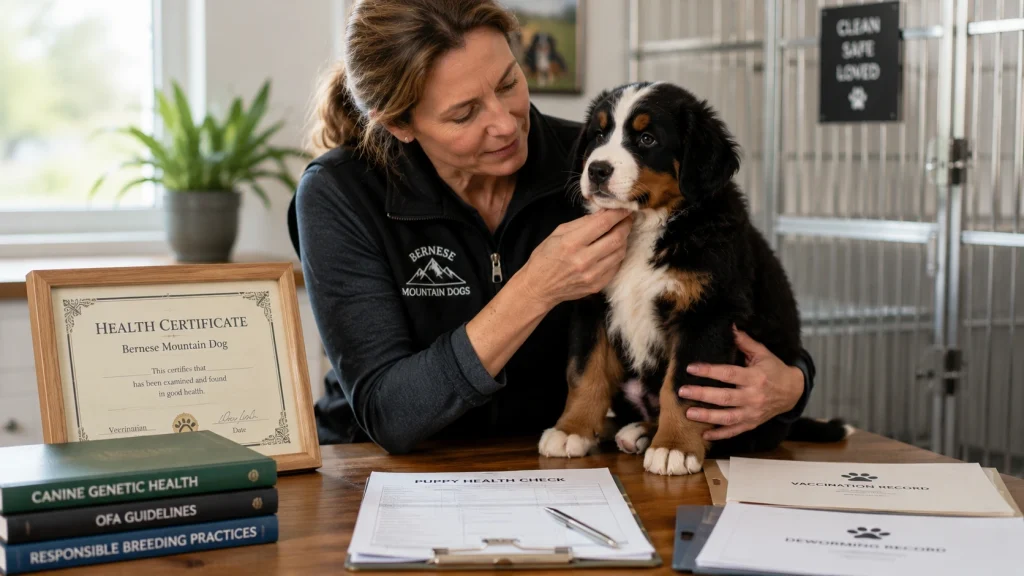
When evaluating a Bernese Mountain Dog breeder, ask for documented evidence of the following health clearances for both parents:
| Test | Passing Standard |
|---|---|
| OFA Hip Evaluation | Excellent, Good, or Fair (done at ≥2 years) |
| OFA Elbow Evaluation | Normal (done at ≥2 years) |
| CAER Eye Examination | By a board-certified ophthalmologist, renewed annually |
| OFA Cardiac Evaluation | By a cardiologist (screens for subaortic stenosis) |
| DNA: Degenerative Myelopathy | Clear/Carrier/At Risk (SOD1 gene) |
| DNA: Von Willebrand Disease | Clear/Carrier/Affected |
| Cancer lineage history | Ask about histiocytic sarcoma in parents and grandparents |
A reputable breeder will welcome every one of these questions. A breeder who deflects, dismisses, or cannot produce documentation is a red flag — regardless of how beautiful the puppies are.
Frequently Asked Questions
What is the most common cause of death in Bernese Mountain Dogs?
Cancer is the most common cause of death in Bernese Mountain Dogs, accounting for at least 55% of deaths in published research. Within that, histiocytic sarcoma — a cancer of immune cells — is the most prevalent, comprising approximately 25% of all cancers in the breed. It progresses rapidly and currently has no consistently effective treatment.
Do all Bernese Mountain Dogs get cancer?
No — not every Berner will develop cancer. However, the statistical risk is significantly higher in this breed than in most others. Selecting a puppy from health-tested parents, feeding a nutritious diet, maintaining healthy weight, and attending regular vet check-ups are the best available tools to reduce risk and catch problems early.
What is the average lifespan of a Bernese Mountain Dog?
The average lifespan of a Bernese Mountain Dog is 6 to 8 years. This is shorter than most large breeds. Some Berners from health-tested lines with attentive owners live to 10 or 11 years, but the breed average remains low due to the high cancer burden.
How do I know if my Bernese Mountain Dog has hip dysplasia?
Common signs include stiffness after rest, reluctance to jump or use stairs, a “bunny-hopping” gait in the hind legs, and difficulty rising from lying down. Hip dysplasia is confirmed by X-ray — your vet can assess joint conformation and refer to an orthopaedic specialist if needed.
Are Bernese Mountain Dogs high maintenance in terms of health?
Yes — Berners require more proactive health management than many breeds. Their predisposition to cancer, joint disease, and several inherited conditions means that routine vet monitoring, biannual check-ups in later years, and attention to diet, weight, and behavioural changes are all genuinely important. Many owners find the extraordinary bond with this breed is entirely worth the commitment.
How does the Berner compare to other large breeds for health problems?
Berners have one of the highest disease burdens among large breeds, particularly for cancer. Breeds such as the Australian Cattle Dog and Beagle are frequently cited as carrying fewer inherited health problems. For a full comparison, see our guide to dog breeds with the fewest health problems.