
🐾 Parent Guide: This article is part of our comprehensive Dog Health & Wellness: Complete Owner’s Guide, where you can find expert advice and tips.
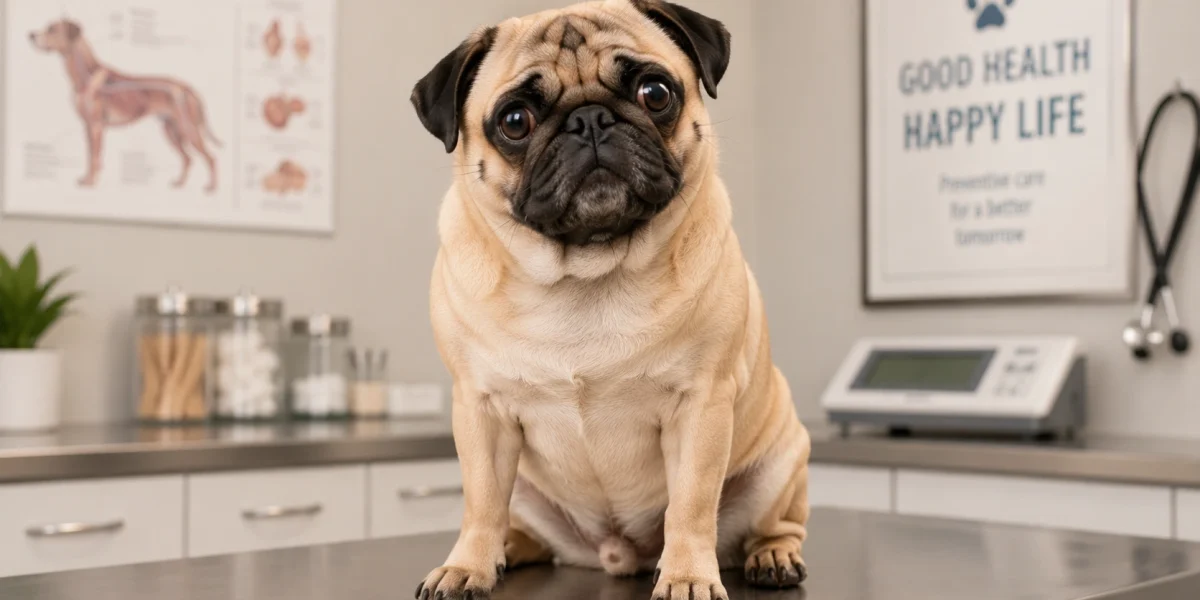
Few dogs inspire the level of devoted, passionate ownership that Pugs do. Their wrinkled faces, soulful eyes, and comedic personalities have made them one of the most recognisable — and most photographed — breeds on earth. They are also one of the most medically complex small breeds, and honest conversation about Pug ownership has to start with one uncomfortable truth: the physical features that make Pugs look the way they do are the direct source of several serious, lifelong health conditions.
This guide is not here to shame Pug owners or condemn the breed. It is here to give you the information you need to give your Pug the best possible quality of life — because an informed Pug owner makes very different decisions about vet care, diet, exercise, and breeding than one who hasn’t been told what to watch for.
How Long Do Pugs Live?
The average Pug lifespan is 12 to 15 years. Despite their health challenges, Pugs can live well into their teens with attentive owners and regular veterinary monitoring. The conditions most likely to shorten a Pug’s life or reduce its quality are respiratory compromise, obesity, and neurological disease.
The Most Common Pug Dog Health Problems
1. Brachycephalic Obstructive Airway Syndrome (BOAS)
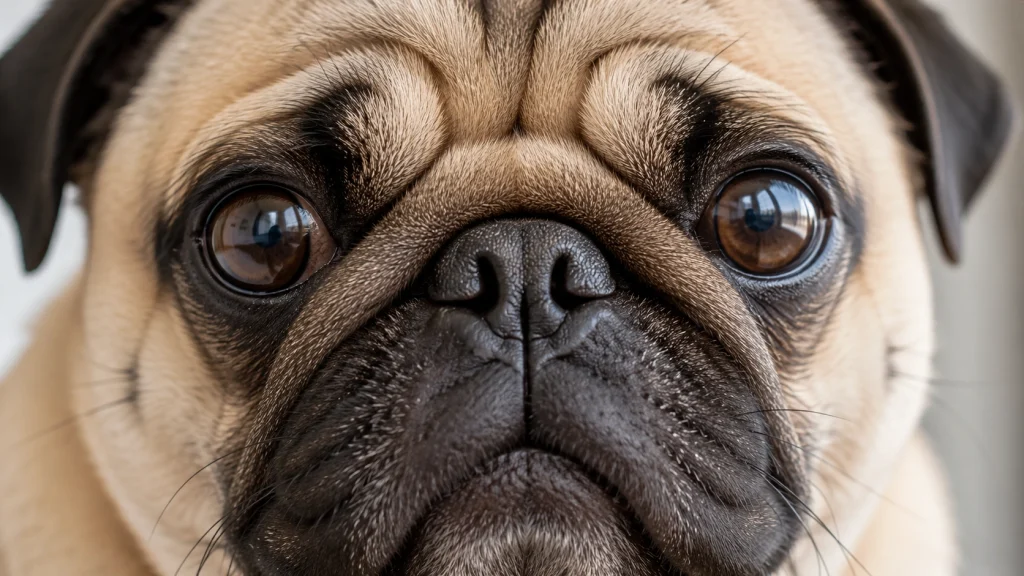
BOAS is the central health challenge of the Pug breed. The term describes a cluster of anatomical abnormalities — stenotic nares (pinched, narrowed nostrils), an elongated soft palate (tissue that partially blocks the airway), a hypoplastic trachea (abnormally narrow windpipe), and everted laryngeal saccules (tissue pulled into the airway by the constant effort of breathing) — that collectively make every breath harder work than it should be.
In mild cases, a Pug snores loudly and tires quickly in warm weather. In severe cases, chronic oxygen deficiency affects quality of life, and surgical correction becomes necessary. BOAS surgery — widening the nostrils and shortening the soft palate — can significantly improve airflow and quality of life when performed by an experienced specialist.
Daily management essentials:
- Avoid all exercise in heat or high humidity — Pugs cannot cool themselves efficiently
- Never leave a Pug in a hot car, even briefly
- Use a harness rather than a collar — a collar puts pressure directly on the already-compressed airway
- Keep the Pug lean — every excess kilogram worsens respiratory effort
- Inform your vet at every procedure: Pugs carry significantly higher anaesthetic risk
2. Pug Dog Encephalitis (PDE)
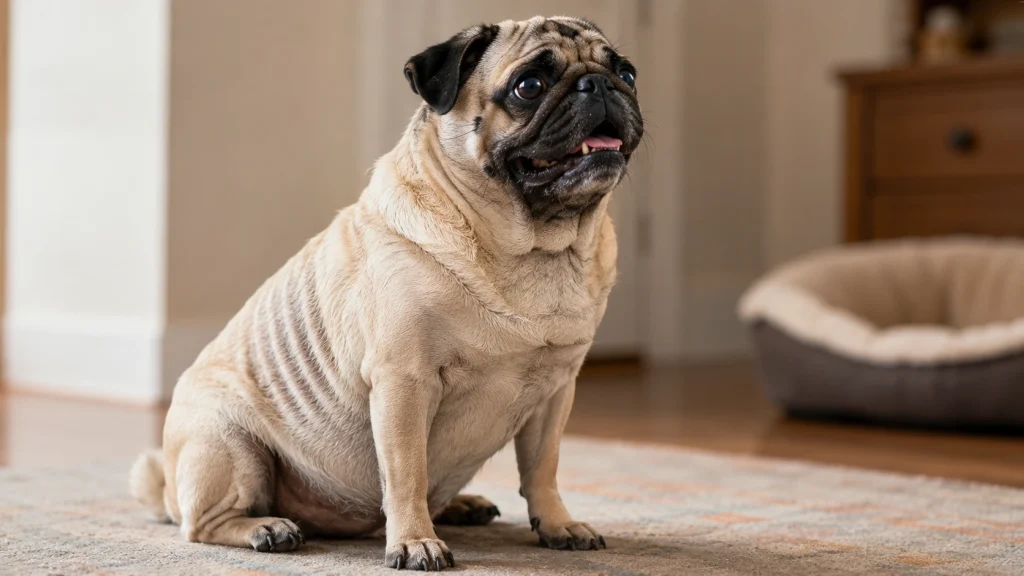
Pug Dog Encephalitis is a fatal inflammatory brain disease unique to the Pug breed. It causes progressive neurological deterioration — seizures, behavioural changes, disorientation, blindness, and death — typically in young to middle-aged Pugs, often between 2 and 3 years of age, although it can strike at any age.
PDE has no cure. Treatment is palliative, aimed at managing seizures and inflammation to extend quality life. A DNA marker test is available through the University of California Davis Veterinary Genetics Laboratory — while not a definitive predictor, it identifies dogs at higher genetic risk.
Signs: seizures in a young Pug, sudden behavioural changes (aggression, confusion, circling), loss of coordination, head pressing, blindness.
3. Eye Problems — Proptosis, Corneal Ulcers, and Dry Eye
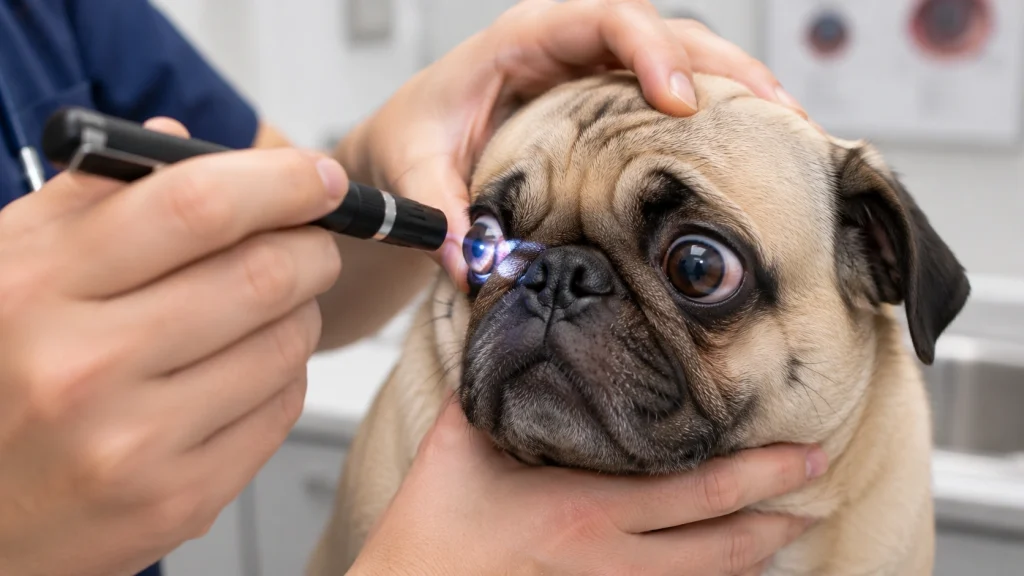
Pugs have the most prominent, protruding eyes of almost any breed. These large, shallow-set eyes are vulnerable in ways that most breeds simply are not:
- Corneal ulcers — the surface of the eye is easily scratched by objects or dried by insufficient blinking
- Proptosis — the eye can be displaced from the socket by direct trauma or even moderate pressure to the head. This is a veterinary emergency
- Pigmentary keratitis — dark pigment gradually deposits across the cornea, progressively reducing vision
- Dry eye (KCS) — reduced tear production damages the corneal surface
Regular eye examinations are essential for Pugs. Any redness, squinting, cloudiness, or discharge that persists more than 24 hours warrants a vet visit. For a full guide to canine eye conditions, see our Dog Eye Health Issues guide.
Never scruff a Pug or apply pressure around the neck or head — the risk of traumatic proptosis is real.
4. Hemivertebrae and Spinal Cord Compression
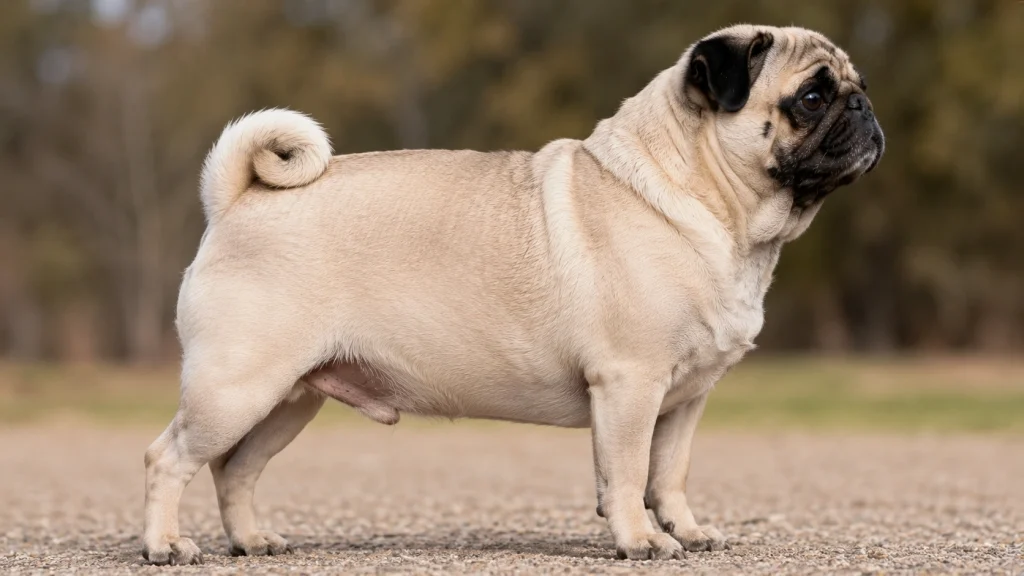
The Pug’s characteristically curled screw tail is caused by malformed vertebrae — hemivertebrae — vertebrae that are wedge-shaped rather than cylindrical. This same malformation can occur in the thoracic (chest) spine, causing vertebrae to press against the spinal cord. Symptoms range from mild hind limb weakness to paralysis.
Not all Pugs with hemivertebrae develop clinical signs — many live their entire lives without significant spinal problems. Neurological signs warrant immediate veterinary investigation including spinal MRI or CT imaging. Surgical decompression can be effective in appropriate cases.
5. Skin Fold Dermatitis
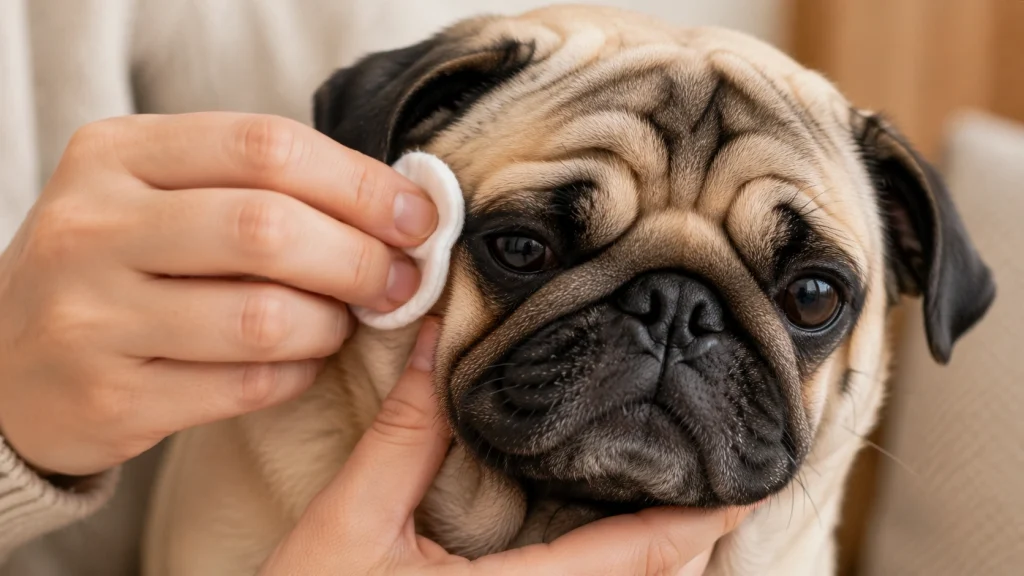
Pugs have deep facial skin folds — the wrinkles that give them their characteristic expression. These folds trap moisture, warmth, and debris, creating ideal conditions for bacterial and yeast infections (skin fold dermatitis). Left untreated, infections become painful, malodorous, and increasingly resistant to treatment.
Prevention is straightforward: clean each fold with a dry cotton pad or specialist wipe every 2 to 3 days — more frequently in warm weather. Keep the skin dry — moisture is the problem. Your vet can recommend appropriate antifungal wipes if yeast infections are recurring.
6. Obesity
Pugs are profoundly food-motivated and entirely willing to convince their owners they are always on the verge of starvation. Because their compressed airways already make breathing a physiological challenge, even moderate excess weight significantly worsens respiratory effort, joint stress, and surgical risk.
Maintaining a lean body condition score is non-negotiable for Pug quality of life. Use a kitchen scale for food portions, avoid high-calorie treats, and engage in regular gentle exercise — short walks in cool conditions rather than prolonged or high-intensity activity.
Warning Signs Every Pug Owner Should Know
Seek emergency care immediately for:
- An eye that appears to be displaced or bulging more than usual — proptosis is an emergency
- Severe breathing distress — open-mouth breathing at rest, blue-tinged gums
Seek prompt (same-day) veterinary attention for:
- Seizures of any kind in any age Pug
- Persistent eye redness, squinting, cloudiness, or discharge
- Hind limb weakness, wobbling, or dragging of rear paws
- Infected or inflamed skin folds that don’t clear with home cleaning
- Increasing respiratory noise or effort that has worsened over days or weeks
- Rapid weight gain — it escalates breathing problems quickly
Pug Breeder Health Screening Checklist

| Test | Standard |
|---|---|
| CAER Eye Examination | Annual ophthalmologist evaluation |
| BOAS Assessment | Clinical grading by a vet experienced in brachycephalic breeds |
| Spinal Imaging | X-ray or MRI to assess hemivertebrae in breeding dogs |
| DNA: PDE Risk | UC Davis DNA marker test for encephalitis risk |
| Patella Evaluation | OFA Patella evaluation — Pugs also have patellar luxation risk |
Frequently Asked Questions
Why do Pugs have so many health problems?
Pug health problems are largely a consequence of selective breeding for extreme flat-faced features. The same anatomy that produces the Pug’s distinctive look also causes breathing restriction, eye vulnerability, and spinal abnormalities. These are structural conditions, not bad luck — they are inherent to the breed’s shape.
Do all Pugs have breathing problems?
Most Pugs have some degree of brachycephalic anatomy — very few are entirely unaffected. The severity ranges from mild (noisy breathing, heat sensitivity) to severe (surgical intervention required). BOAS assessment by an experienced vet gives the most accurate picture of an individual Pug’s airway status.
Is Pug Dog Encephalitis common?
PDE is not the most common cause of death in Pugs, but it is the most breed-specific and most devastating. Its unpredictable onset in young dogs makes it particularly heartbreaking. The UC Davis DNA marker test can inform breeding decisions and risk awareness, though it does not provide a definitive prognosis for any individual dog.
Can Pugs live 15 years?
Yes — Pugs that are maintained at healthy weight, monitored regularly, and live in cool environments regularly reach 13 to 15 years. Weight management and heat avoidance are the two most directly controllable factors in Pug longevity.