
🐾 Parent Guide: This article is part of our comprehensive Homemade Dog Recipes & Treats Guide, where you can find expert advice and tips.
Balancing minerals is key to formulating healthy homemade dog diets. Consult the Hill’s Pet database on canine nutrient requirements to understand key vitamin profiles.
Introduction
As commercial pet food recalls become more common, many dog owners are looking for alternatives. Cooking at home gives you complete control over what goes into your dog’s bowl, letting you skip the questionable fillers, preservatives, and low-quality meats found in some kibbles. However, switching to a home-cooked diet is not as simple as feeding your dog chicken breast and rice.
According to veterinary nutritionists, over 90% of homemade dog food recipes found online are nutritionally deficient. Over time, feeding an unbalanced diet can cause severe health issues, including heart diseases, bone mineral loss, and immune deficiencies.
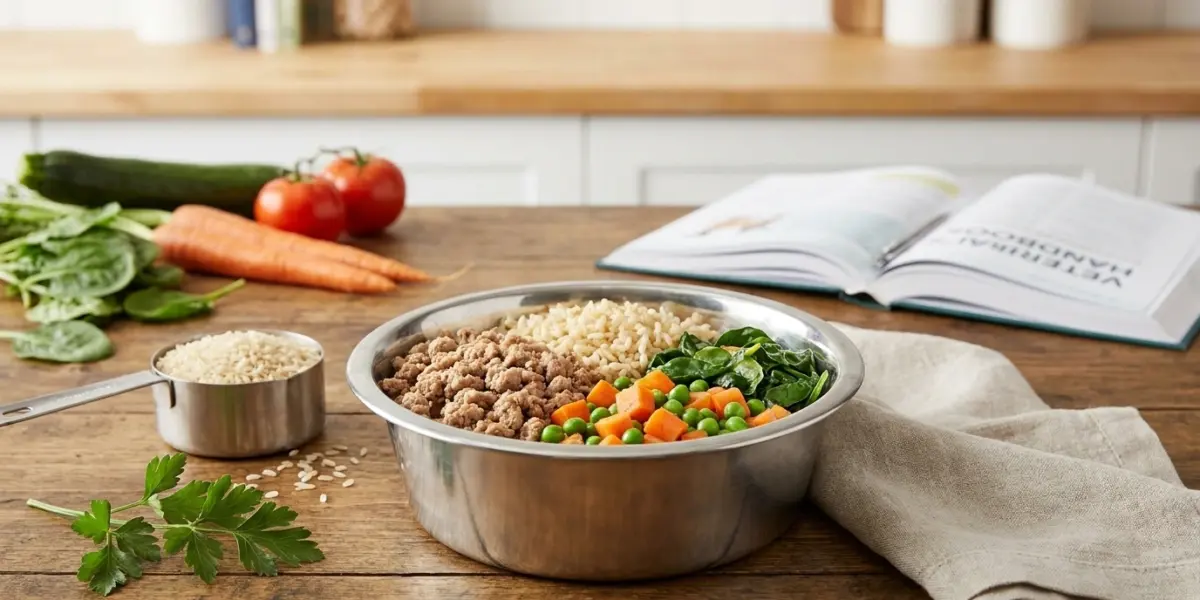
To help you cook safely, this guide outlines the key principles of a nutritionally complete homemade dog food diet. We are sharing two vet-approved, balanced recipes (a turkey and vegetable stew and a grain-free beef mix) and explaining how to use supplements to meet your dog’s daily micro-nutrient requirements. Let’s make pet nutrition simple and safe!
The Hazards of Unbalanced Home Cooking
It is a common misconception that because dogs evolved from wolves, they can thrive on plain muscle meat. In the wild, canines consume the entire animal—including bones, organs, skin, and partially digested stomach contents. This provides them with essential vitamins, trace minerals, and calcium.
Feeding a dog a diet consisting only of ground beef or chicken breast lacks calcium, zinc, iron, copper, and vitamin D. This can lead to a condition known as nutritional secondary hyperparathyroidism, where the dog’s body pulls calcium from its bones to maintain blood calcium levels, making their skeleton weak and brittle.
To create a balanced home-cooked meal, you must follow the strict ratios recommended by the Association of American Feed Control Officials (AAFCO). Every recipe must contain:
1. Clean Proteins: Build and repair muscle tissue.
2. Healthy Fats: Provide energy and keep their skin and coat healthy.
3. Carbohydrates: Provide digestible energy and fiber for gut health.
4. Calcium: Balances the phosphorus in the meat to support bone health.
5. Vitamins and Minerals: Ensure proper cell and metabolic function.
By understanding these essential ratios, you can confidently prepare meals that keep your dog healthy and active.
Meal Prep and Ingredient Ratios
To make home cooking efficient, we recommend preparing large batches and freezing individual portions. This saves time and ensures your dog always has a balanced meal ready.
Essential Micronutrient Supplements
Even with a variety of meats and vegetables, it is impossible to meet AAFCO standards without adding supplements. You must add:
- Calcium Carbonate or Bone Meal: Meat is very high in phosphorus. To protect your dog’s kidneys and bones, you must maintain a calcium-to-phosphorus ratio between 1:1 and 2:1. Since raw bones are unsafe to feed cooked, adding powdered calcium is essential.
- Omega-3 Fatty Acids: Liquid fish oil or kelp powder supplies EPA and DHA, which support brain development, protect joints, and reduce skin allergies.
- Canine Vitamin-Mineral Powder: Specialized pre-mixes like JustFoodForDogs DIY Nutrient Blend or Hilife supplement powder contain the exact amounts of zinc, iron, copper, selenium, and B-vitamins needed to fill nutritional gaps. Always follow the package instructions based on the raw weight of the meat.
Homemade vs. Commercial Pet Food Comparison
This table compares the key features of homemade cooking with standard commercial kibble:
| Option | Ingredient Transparency | Control Over Allergies | Prep Time | Shelf Life |
|---|---|---|---|---|
| Homemade (Balanced) | 100% (You buy the ingredients) | Complete control | High (Requires cooking) | Low (4 days in fridge) |
| Premium Kibble | Moderate | Limited to formulas | None (Open and pour) | High (Months) |
| Raw Food (Commercial) | High | Moderate | None (Thaw and serve) | Low (2 days after thawing) |
Smart Internal & External Linking
Internal Links
- Pillar Page: Find more recipes in our comprehensive Ultimate Guide to Homemade Dog Recipes & Treats.
- Related Treats:
– Complete the meal with a warm bowl of nutrient-dense bone broth for dogs.
– Treat your dog to dessert with our dog ice cream recipe.
External Sources
- AAFCO Dog Food Nutrient Profiles — The industry standard for complete canine nutrition.
- UC Davis Veterinary Medicine Home-Cooked Diet Study — Discussing the common nutritional deficiencies in online pet recipes.
FAQ (Semantic Questions)
Do I have to cook the meat?
While some owners choose raw diets, cooking the meat is highly recommended. Simmering or baking the meat kills common bacteria like Salmonella, E. coli, and Listeria, which can cause severe food poisoning in both dogs and the humans handling their food. Cooking also makes the starches in vegetables and grains much easier for your dog’s gut to digest.
Can I feed my dog raw vegetables?
Dogs have a short digestive tract and cannot break down the tough cellulose walls of raw vegetables. To make vegetables digestible, you must steam, boil, or puree them first. This ensures your dog can absorb the vitamins and minerals inside the vegetables rather than passing them whole in their stool.
What is the correct calcium-to-phosphorus ratio?
For dogs, the ideal calcium-to-phosphorus ratio is between 1.1:1 and 1.3:1. Because meat is rich in phosphorus and low in calcium, feeding a meat-only diet will cause a calcium deficiency. Adding a measured amount of calcium carbonate powder is vital to maintain this balance.
Can I use human multivitamin supplements?
No. Human multivitamins contain vitamin ratios designed for human biology and can be dangerous for dogs. For example, human supplements often contain iron or vitamin D in doses that are toxic to dogs, or they may use artificial sweeteners like xylitol. Always use a multivitamin specifically formulated for dogs.
How do I switch my dog to a homemade diet?
To avoid stomach upset, transition your dog slowly over 7 to 10 days. Start by mixing 25% of the homemade food with 75% of their old kibble. Every few days, increase the homemade portion while decreasing the kibble until they are eating 100% fresh food.
Can I feed my dog pork or lamb?
Yes, lamb and pork are excellent protein sources. However, they are typically higher in fat than turkey or chicken. If you use pork or lamb, choose lean cuts and trim off excess fat to reduce the risk of digestive upset or weight gain.
Conclusion
Home-cooking is a fantastic, loving way to feed your dog, provided you commit to making the meals nutritionally complete. By combining clean proteins, healthy carbohydrates, steamed vegetables, and the correct calcium and multivitamin supplements, you can create a diet that supports their long-term health.
Try prepping a batch of our Turkey, Brown Rice & Veggie Stew this weekend. Your dog will love the fresh taste, and you will love knowing exactly what is keeping them healthy!