
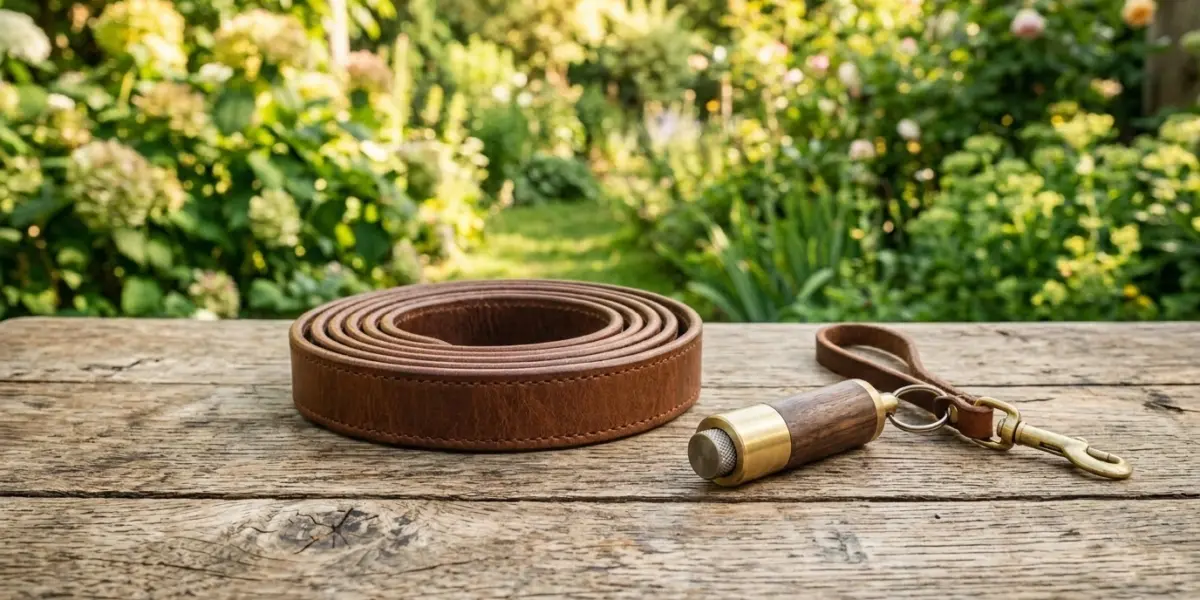
The leash is the primary communication channel between you and your dog during walks and training sessions. A high-quality leash does not just prevent your dog from running away; it transmits subtle physical cues, keeps your dog focused, and ensures the safety of everyone around you.
Many dog owners make the mistake of using a generic, low-cost leash or a retractable leash, which can actually encourage pulling and increase training difficulty. Selecting the best dog training leash for your specific training goals—whether that is loose-leash walking, distance recall, or field trials—is critical. In this guide, we break down the different types of leashes, review the top-rated training leashes, and explain how to select the right material.
The Three Core Types of Training Leashes
Different training exercises require different equipment. Understanding when and how to use each type will accelerate your training progress.
1. The Standard 6-Foot Training Leash
This is the baseline tool for every dog owner. A 6-foot length is widely recognized by trainers as the optimal distance for teaching heel, basic commands, and loose-leash walking.
- Best For: Daily walks, vet visits, and basic obedience training.
- Target Material: Leather or heavy-duty nylon.
2. The Long Line Leash (15–50 Feet)
A long line allows your dog to explore and run while keeping them securely attached. It is used to transition from on-leash control to off-leash reliability.
- Best For: Recall training (“Come”), distance commands, and tracking work.
- Target Material: Biothane or lightweight nylon.
3. The Slip Lead Leash
A slip lead has a loop on the end that slips over the dog’s head, functioning as both a collar and a leash. It features a leather or plastic slide stopper to adjust the fit.
- Best For: Quick transitions, agility training, and dogs that pull lightly.
- Target Material: Round climbing rope or woven nylon.
Materials Matter: Leather vs. Biothane vs. Nylon
The material of your leash directly impacts your grip, safety, and comfort, especially if you have a large, strong dog.
- Leather: The premium choice for professional trainers. Leather is incredibly strong, lasts a lifetime if cared for, and is soft on the handler’s hands. It has a natural elasticity that absorbs shock if your dog lunges.
- Biothane: Biothane is a polyester webbing coated with polyurethane. It is 100% waterproof, odor-proof, and easy to clean (just wipe with a damp cloth). It is the absolute best material for long lines because it won’t absorb water or mud and does not tangle easily.
- Nylon: Woven nylon is lightweight, colorful, and affordable. However, it can absorb water, get heavy when wet, and cause painful leash burns on your hands if a strong dog pulls suddenly.
Top 4 Dog Training Leashes Reviewed
Here are our top recommended training leashes, evaluated for durability, safety, and functionality.
1. Signature K9 Biothane Leash (Best Overall training leash)
This standard leash combines the strength of leather with the weather-resistance of Biothane. It is equipped with solid brass snaps and is completely waterproof, making it the perfect daily training tool.
- Key Features: Genuine coated Biothane, solid brass snap, 1/2-inch or 3/4-inch widths, 6 feet long.
- Best For: Everyday training, wet weather walks, and active dogs.
- Pros: Indestructible, odor-proof, waterproof, easy to wash, brass hardware won’t rust.
- Cons: Can feel slightly stiff when brand new (softens with use).
2. Logical Leather 6-Foot Training Leash (Best Leather Option)
Made from a single piece of premium full-grain leather, this leash is favored by military and police K9 handlers. It has a military-grade alloy snap and offers exceptional durability.
- Key Features: Full-grain premium leather, heavy-duty alloy hardware, 6 feet long.
- Best For: Obedience training, large breeds, and heel work.
- Pros: Extremely strong, comfortable leather handle (no leash burn), classic professional look.
- Cons: Requires occasional leather conditioning to maintain pliability.
3. Mendota Products Large Slip Lead (Best Slip Lead)
Mendota slip leads are made from highly durable, soft solid-core polypropene rope. It features a leather slide lock and is exceptionally easy to slip on and off for quick training transitions.
- Key Features: Solid braid polypropylene rope, oil-tanned leather accents, adjustable slide stopper.
- Best For: Picky dogs, agility transitions, and teaching focus.
- Pros: Soft on the neck and hands, no collar needed, beautiful rope aesthetic.
- Cons: Can become a choking hazard if allowed to tighten continuously without correction.
4. Trailwise Biothane Long Line (Best Long Line for Recall)
This long line is designed for recall and stay training. Available in 15, 30, and 50-foot lengths, its Biothane material slides easily over brush, rocks, and mud without snagging.
- Key Features: Waterproof Biothane, stainless steel hardware, multiple length options.
- Best For: Recall training, tracking, and open-space exploration.
- Pros: Won’t collect water or debris, highly visible, tangles are easily shaken loose.
- Cons: Requires two hands to wrap and store cleanly.
Comparison Table of Training Leashes
| Leash Type | Material | Key Benefit | Waterproof? | Best Use Case |
|---|---|---|---|---|
| Signature K9 | Biothane | Weather-resistant & clean | Yes | Daily walks & basic training |
| Logical Leather | Full-Grain Leather | Comfort & shock-absorption | No | Professional obedience |
| Mendota Slip Lead | Polypropylene Rope | Fast transitions & focus | Yes (Quick Dry) | Agility & quick control |
| Trailwise Long Line | Biothane Coated | Long distance control | Yes | Recall & tracking |
Crucial Leash Safety Rules to Follow
- Never Use Retractable Leashes: Retractable leashes teach dogs to pull (tension means freedom), can easily snap, and can cause severe injuries if the thin cord wraps around fingers or legs.
- Check Snaps Daily: Inspect the metal snap regularly. Dirt or sand can jam trigger snaps, causing them to fail under tension. Slide snaps or locking carabiners are the safest options.
- Avoid Wrapping the Leash: Never wrap the leash around your hand or fingers. If your dog bolts, this can break bones or cause severe friction burns. Instead, fold the leash back and forth in your palm.
Related Guides & Resources
Enhance your training toolkit with our expert guides: