
🐾 Parent Guide: This article is part of our comprehensive Traveling with Your Dog: The Complete Car & Travel Guide, where you can find expert advice and tips.
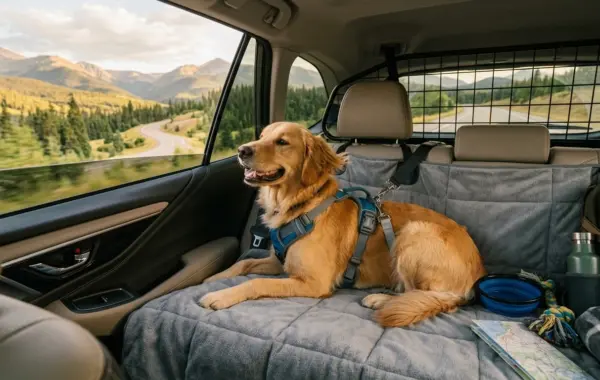
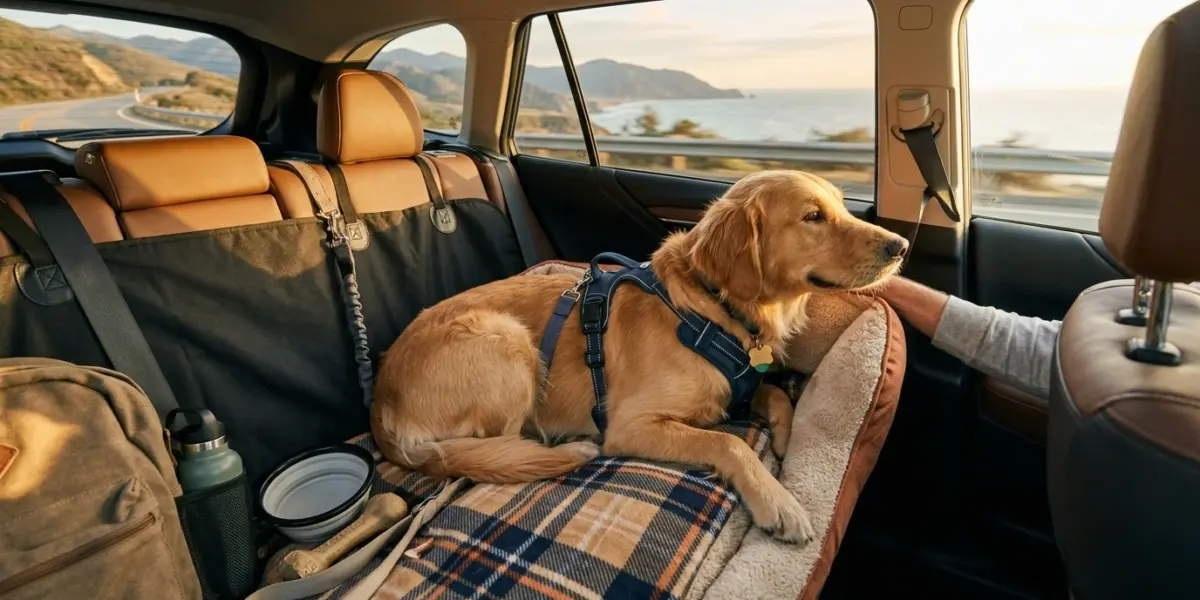
A car dog bed gives your dog a familiar, comfortable sleeping surface during travel, reducing anxiety and motion sickness. Our guide reviews the best car beds by size, filling, and non-slip base design.
Why Dog Car Safety Matters More Than You Think
An unrestrained 30kg dog in a 30mph collision generates an impact force equivalent to approximately 600kg. Even at low speeds, a dog flung forward in a crash can seriously injure both itself and the vehicle occupants. Despite this, studies consistently show that fewer than 20% of dog owners use any form of restraint when travelling with their dog.
Beyond crash safety, unrestrained dogs distract drivers. A dog that moves freely in a vehicle — jumping between seats, pressing against the driver, or barking out a window — increases accident risk significantly. Proper containment protects both your dog and every person in the vehicle.
Understanding Your Options
Installation & Fit Guide
Even the best safety product is ineffective if incorrectly installed or improperly fitted. Follow these universal fitting principles:
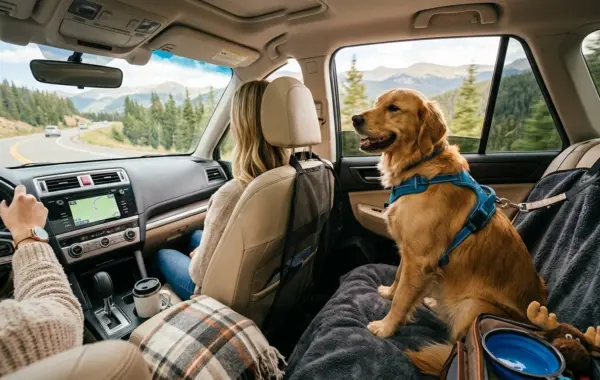
- Harnesses: Should fit snugly enough that you cannot fit more than two fingers between the harness and your dog’s body. Check for chafing around the armpits and neck.
- Crates: Must be secured to the vehicle structure (boot floor anchor points or seatbelt threading) — an unsecured crate becomes a missile in a crash.
- Barriers: Must contact the headrests of the rear seats and the floor/boot at multiple anchor points. Barriers that only contact one point tip over in sudden stops.
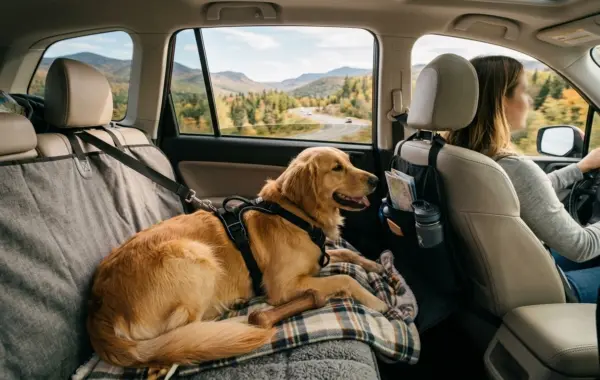
- Seat covers: Hook-end strap attachments should connect to headrest posts securely — not just draped over them.
Frequently Asked Questions
Is it illegal to travel with an unrestrained dog?
In the UK, Highway Code Rule 57 states that dogs must be restrained in vehicles. Failure to do so can result in a fine and potentially invalidate your insurance if the dog is deemed a distraction contributing to an accident. In the US, laws vary by state — New Jersey and Hawaii have specific dog restraint laws, while other states fall under distracted driving statutes.
What is the safest way for a dog to travel in a car?
The safest option is a crash-tested, secured dog crate in the boot of an estate car. This keeps the dog fully contained and separated from the passenger compartment. A crash-tested dog harness clipped to a car seatbelt is the next-safest option for dogs that do not tolerate crates. See our best dog car harness guide for crash-tested picks.
How do I help my dog feel comfortable in the car?
Start with stationary car sessions with high-value treats, then very short drives, building duration gradually. Dogs that have been conditioned positively to the car from puppyhood travel far more comfortably than those introduced to travel as adults. For dogs that suffer car sickness, see our dogs and car sickness guide.